 Meditation, like most practices in life is very person specific. There is no right or wrong meditation practice and there is no failure when meditating. A lot of people, including myself at the start, think that if your mind isn’t completely clear and it drifts off into thought, then it was a complete failure. As soon as I realised that just trying to meditate, no matter how much my mind drifted was a successful meditation practice, the better I felt about the practice and the calmer my life in general became.
I now practice an active meditation almost every day, normally yoga or jogging in the morning and when I feel that there is something specific on my mind, I practice an insight meditation (sometimes while taking a walk).
Getting into this routine was not an easy journey, I tried a number of different kinds of meditation for a few weeks each to see which style works best for me. See more detail of what each type is later in the blog.
I started with a mantra meditation, during this time I went through a number of different emotional states from very flat energy levels and mood to high. It didn’t feel like any of these were attributed to the meditation though, I didn’t feel much different as I progressed and battled to focus during the meditation sessions. I did this for longer than a few weeks to give it a chance and changed up the mantra from repeated positive affirmations to repeating “Aum!”s for 10 minutes per day, normally in the morning.
Next I tried insight meditation, thinking through things that were distracting me or on my mind at the time from my health, to work, to relationship issues, to financial areas. After each session I found that I had a plan or a better understanding of my feelings concerning the topic and that my mind was a lot more at ease. I did find that it wasn’t as beneficial if I had to try find something to meditate on but very effective if it was something I was already worried about so this may not be for a daily meditation but when I have something specific on my mind.
I then tried mindfulness (vipassana) mindfulness meditation. I tried focussing on sounds as well as breathing (vipassana). I did find myself a little calmer after each session, nothing life-changing though. It does take a lot to get my monkey mind to calm down. Using this technique definitely helps when used as a foundation to the other meditation techniques.
The next thing I explored was active meditation, firstly by doing 20 minutes of yoga every morning… I have found this extremely useful to get my day started well. I feel more relaxed and because it is active, my body feels stronger and more flexible as well. I then tried active meditation while taking a 10 minute walk, which got me focussed but it wasn’t as relaxing as the yoga. Lastly I tried it while jogging and found this very useful.
Lastly, I tried guided meditation, this included guided meditations found on YouTube, using apps like Calm, Headspace and Oak. I found this helped me focus and made it easier than the Vipassana meditation but struggled with the calming voice in that I would fall asleep during the meditation. I also didn’t find that the overall calming benefits were as good as the active meditation for me.
I suggest trying different types of meditation and seeing what works best for you. When you find something that works, add it as part of your routine and remember if you feel like you don’t have time to meditation, that’s when you need it the most.
More info on each type of meditation
There are different schools of thought regarding what is considered meditation and what isn’t, and what various categories of meditation there are. These are the ones five categories which I feel encompass most types of meditation:
1. Mantra/Affirmation meditation
 This type of meditation involves repeating a phrase or word. The phrase acts as an anchor to clear your mind. The Transcendental Meditation (TM) movement has made mantra/affirmation meditation a popular form of meditation. Essentially, the vibrations of the word or phrase are supposed to act as an anchor, as well as a stimulant to allow for a clear mind.
You can use a poem or song as your mantra. Try to visualise it in your mind’s eye and just focus on the first word of your mantra for 10-15 seconds (don’t worry about being exact because that defeats the purpose). Then clear your mind and either mentally or audibly repeat “Aum!” deeply and slowly three or four times, then move onto the next word…. Continue through the entire mantra until you get to the end.
You can also repeat a positive affirmation or phrase (Tony Robbins style) such as: “I am great, I am a good person, I am a strong person, etc..” Or meditate on any particularly motivational or inspirational quote that will force you to focus on positivity.
What you use as your mantra or affirmation is completely up to you. Just use what works for you and what you’re comfortable with.
2. Insight meditation
 Insight meditation is designed to explore and focus on one thought or feeling. Before starting an insight meditation, it’s important to have a very calm mind. It might be useful to begin with a breath (mindfulness) meditation to quiet your monkey mind. Once you feel calm and relaxed, you’re ready to move into your insight meditation.
Pick a topic. Any topic. It could be “love” or “anger” or “justice” or even “death.” Once you have your topic, allow your mind to just run. Don’t try to control what thoughts come to you. Just let these thoughts pass. Don’t judge them or try to self-edit them.
Sometimes it is helpful to think of a negative topic like “hate” and let your mind run. You might be surprised by what pops up in your mind, but don’t judge. Just let your mind do its thing. Sometimes it’s helpful to explore why you associate the images popping up into your head with the word “hate,” and then try to release that negativity.
If you are going to do an insight meditation with a negative topic, it’s important to end your session focusing on something positive. You don’t want to leave your meditation on a sour note. Plus, ending on the positive may give you a better picture of how you really feel about a topic. You may discover that a thought you associated with a negative topic ends up returning as a positive association.
Insight meditation is extremely useful in clearing your mental garbage. It forces you to explore and make connections you may have long forgotten about, but that are still affecting you on a subconscious level.
3. Mindfulness meditation
 The goal of mindfulness meditation is to relax and calm your “monkey mind.” What’s the monkey mind? It’s the constant and restless shifting of thoughts that goes on in your head all day. Mindfulness meditation seeks to quiet the thoughts controlling your attention and to direct your attention to one thought or sound that serves as your “anchor.” Your anchor could be the sound of water flowing, the repetition of a word, or even your own breath.
This is normally done in 15-30 minute sets. It’s a wonderful tool for relaxation, or to act as a primer for spiritual work or another form of meditation. When thoughts come into your mind (and I promise they will) simply try to dismiss them. You may find that a single and pressing thought keeps reoccurring. If that’s the case, take the time to ponder why that thought is so important right now.
One useful mindfulness meditation technique is the Buddhist breath meditation, “vipassana.” In vipassana you simply observe your breath or use a “breath set” to anchor your thoughts. For a breath set, inhale and count (1, 2, 3, etc.), and once you reach your set, exhale and count (1, 2, 3, etc.). Repeat.
Simply observe the sensation of the breath entering your nose/mouth, entering and filling your lungs, and then being released through your nose/mouth. As thoughts come into your mind, try to dismiss them and get back to focusing and observing your breath.
4. Active Meditation
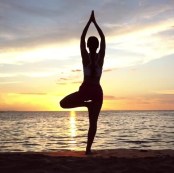 This type of meditation involves physical activity to allow your body and mind to get into sync, which allows you to experience peace, calm, and clarity. Many people practice/experience this without even knowing it. Ever feel “in the zone” while playing a sport? Perhaps you’ve heard of people “losing themselves in the beat” while dancing. Or maybe you’ve experienced the “runner’s high.”
This type of meditation can be as simple as going for a walk, practicing yoga, dancing, or simply working out. Just as in mindfulness meditation, the key is to clear your mind and use the workout or physical movement as an “anchor” to clear your mind of mental garbage. Simply focus on the movement of your body, and the activity immediately in front of you. And if thoughts keep popping up, dismiss or explore them based on their importance. You can also repeat a mantra or positive affirmation in the activity to provide another anchor or stimulation.
5. Guided meditation
 These meditations are guided by someone (in person or via audio) who takes you through a certain scenario, or even an archetypal dream-type world. You can create your own guided meditation by developing a “plan” for your meditation.
Guided meditations allow your imagination to run wild and to really explore mental associations in a very active way. Think of guided meditation as watching an amazing movie where you’re the writer, director, and star.
For example, in your guided meditation you can imagine visiting your younger self to work through issues, have a conversation with a deceased loved one to finish some unsettled business, or even ask advice from some great man that you admire. The possibilities are limited only by your imagination.


 I have recently taken a 5 month mini-retirement from my most stressful job. Mini-retirements are becoming quite popular (well popularised in The 4-Hour Workweek by Tim Ferriss) so I thought I would give it a try.
 Experienced the extremes of New Zealand’s environments (harsh Milford Sound vs tranquil Lake Matheson)
 And the extremes of Kuwait (lovely city in the harsh dessert)
 Ending up in Germany (from the Bavarian Forrest to Dusseldorf area)

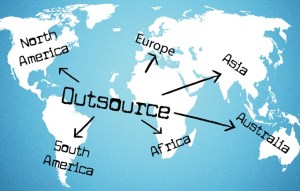 I used to a strong advocate of outsourcing everything that could be done cheaper by somebody else and used to push others to do the same. Below are the steps I consider now, and why.

 There are hundred, even thousands of sites and apps that will pay you money to do various mundane tasks. Some examples of the things you can do to make money on these sites are: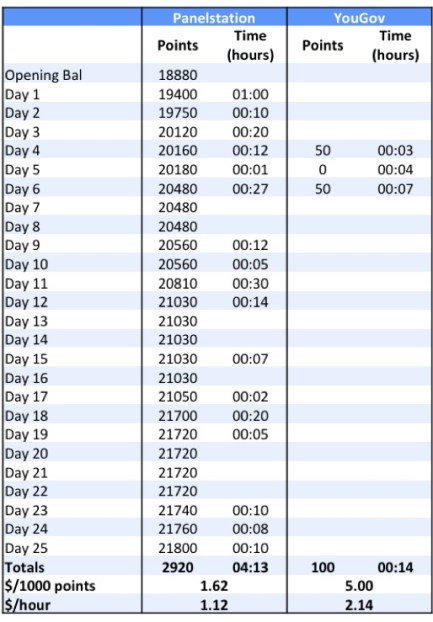
 Simple Naked Life
You must be logged in to post a comment.